by Lauren Calicchia, BSc. (Hons.), MD Student, University of Toronto
Why Sun Safety Matters
One of the leading causes of skin cancer is exposure to ultraviolet (UV) radiation, including tanning beds and unprotected sun exposure.1 The good news is that most cases are highly preventable through consistent sun safety practices and healthy daily habits. Research shows that only 24% of people regularly apply sunscreen at the recommended intervals while exposed to the sun.2 This gap between knowing what to do and actually doing it is a widely studied topic in behavioural science, and understanding how habits form is essential to creating lasting change.
How Habits Actually Work in Your Brain
A habit is not simply a repetitive behaviour, but a form of learning in which the brain essentially creates a shortcut between a cue or prompt and a desired action. This causes the action, or response, to occur automatically, without conscious thought or external motivation each time.3
Normally, when you perform a behaviour, such as putting on a hat before going outside, the part of your brain responsible for decision-making, called the prefrontal cortex, takes control and exerts effort so you can complete that action.3 In this moment, you have to remember, decide, and actively follow through with the task at hand. This can require a significant amount of effort at first.
However, as you repeatedly perform the behaviour in response to the same prompt (for example, “after I put on my shoes, I put on my hat”), a different part of your brain begins to take over: the region responsible for automatic actions. This part of the brain is called the dorsal striatum.3 As the dorsal striatum becomes more involved, it reduces the burden on the prefrontal cortex, meaning the action now requires significantly less mental energy to occur.
This shift explains how habits can become a powerful tool for building healthy behaviours, as these repeated actions eventually become independent of memory or motivation.3 Over time, these behaviours become second nature, much like putting on your seatbelt when you get into a car.
The Three Ingredients of a Habit
There are three key elements that need to occur for habits to be effectively formed:
- A “cue” or “prompt”: This is something that occurs to trigger the desired behaviour. It can be a location, a time of day, or even another action that you already perform automatically. The more consistent the cue is, the stronger and more effective the habit becomes over time.4
- Repetition: To successfully form habits, the behaviour must be performed consistently.4 There is a wide range of average times for a behaviour to feel automatic, with one study reporting a median of 59–66 days and a mean of 106–154 days.5 While this range is broad, the timeframe also depends on the complexity of the behaviour itself. More complex or multi-step habits generally require a longer period of repetition before they become automatic, compared to simpler, single-step actions.5
- Reward: One of the most well-established concepts in psychology is positive reinforcement. Behaviours that feel rewarding or are followed by something positive are significantly more likely to become automatic and long-lasting.4 The reward can be as simple as checking off a box on a habit tracker each day, but these consistent positive reinforcements are essential for effective habit formation.4
The Three Sun Safety Behaviors to Make Automatic
Now that you understand how habits are formed, here are some sun safety behaviours you can begin to make automatic:
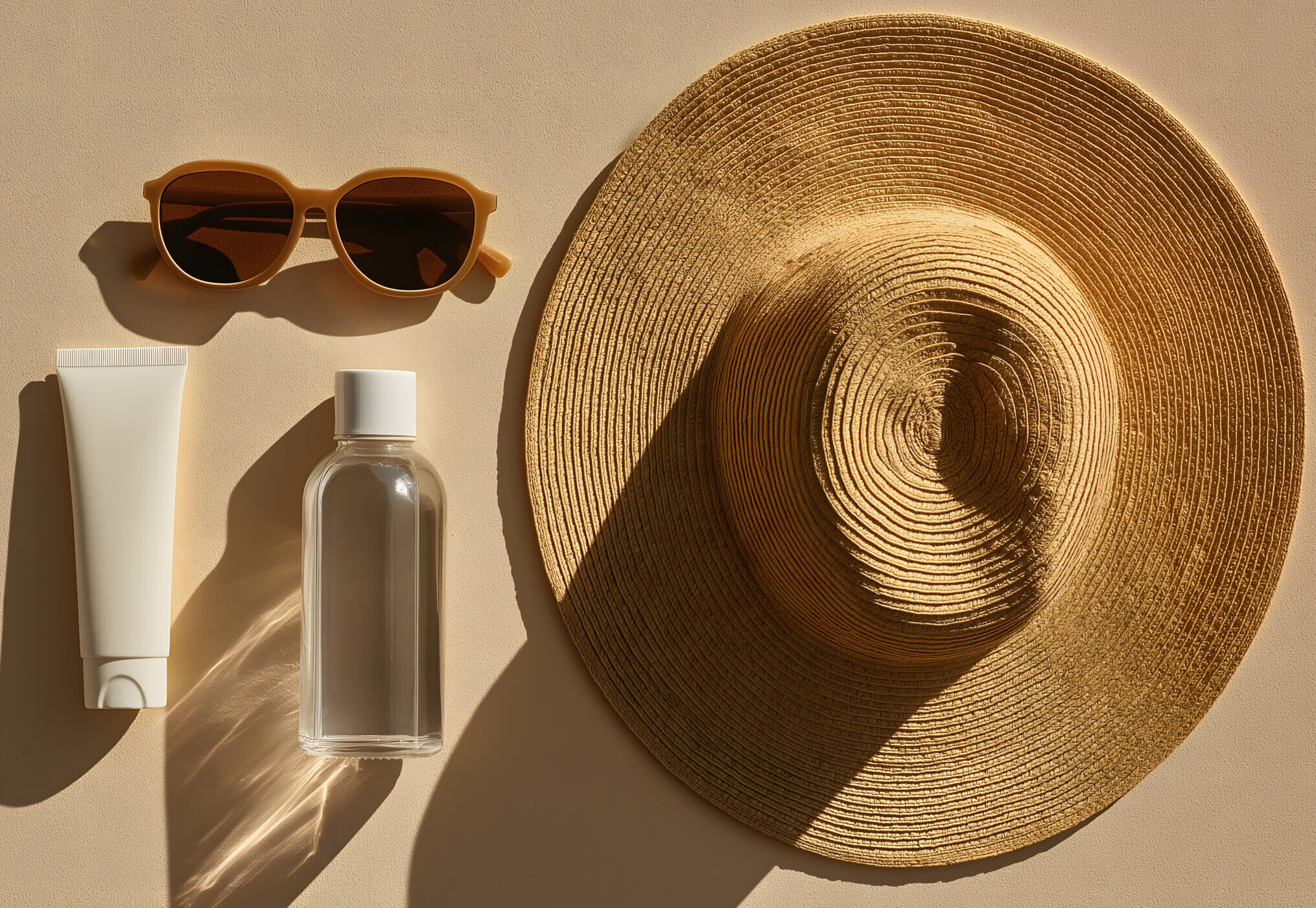
- Applying sunscreen: Apply a broad-spectrum sunscreen with SPF 30 or higher each morning before going outside.6 Be sure to reapply it every two hours, especially during prolonged sun exposure.
- Wearing a hat: Wearing a hat, particularly a wide-brimmed hat that covers the head, face, and neck, is an effective habit to adopt in order to protect yourself from harmful UV radiation.6
- Wearing sunglasses: Consistently wearing sunglasses with UV protection can help protect your eyes from sun-related damage.6
Strategies for Habit Implementation
The trick to habit implementation is to be extremely specific. “I’ll wear sunscreen more” is a goal. Using the below strategies can turn that goal into actionable steps, allowing progress to become more attainable in both the short- and long-term.
#1: Implementation Intentions
Implementation intentions, also known as “If-Then” statements, are a simple strategy used to connect an already automatic behaviour to a new action.7 This technique works by pre-loading a decision into your memory so that when the cue occurs, your brain does not need to pause and create a plan; instead, it can immediately carry out the pre-established action.7 The format is as follows:
“If [prompt/cue A occurs], then I will [do action B].”
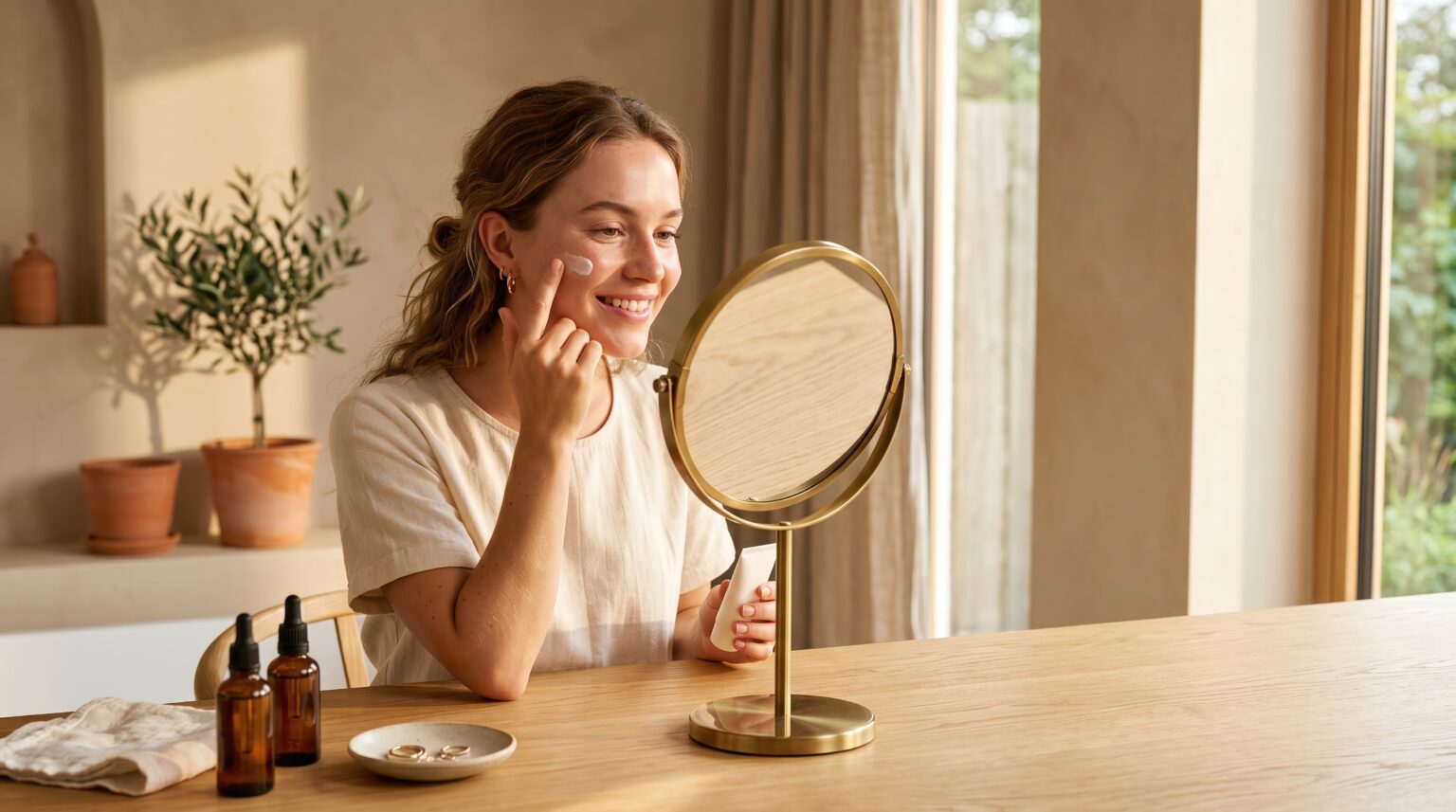
For example: If I brush my teeth in the morning, then I will apply sunscreen to my face.
#2: Habit Stacking
Habit stacking, formally called routine-based cue planning, is a simple and effective method for developing routine behaviours.8 This strategy involves linking a new, desired behaviour to an existing habit. In this process, the existing habit acts as the cue for the new behaviour.8 A randomized controlled trial found that connecting a new behaviour to an established daily routine was just as effective as linking it to a specific time of day, and that planned repetition was the strongest predictor of whether the behaviour eventually became automatic.8 An example of habit stacking is outlined below:
Example morning routine:
- Morning hygiene/routine: Brush teeth → apply sunscreen (keep it next to your toothbrush)
- Getting dressed: Put on clothes → put on a sun hat (hang it where you keep your keys)
- Leaving the house: Grab phone and wallet → grab sunglasses
#3: Reducing Friction & Barriers to Implementation
Even small barriers can prevent people from following through on their plans and forming new habits. Reducing or eliminating these barriers is an important step in increasing the likelihood that intended behaviours will be carried out consistently.9
Friction-reducing strategies for sun safety behaviours:
- Keep sunscreen in multiple locations (car, desk, bathroom, etc.) so it is always easily accessible.
- Buy a hat that you genuinely enjoy wearing so the behaviour feels more enjoyable and sustainable.
- Use a moisturizer with built-in SPF 30+ so applying sun protection does not feel like an additional task.
The goal is to make sun-safe behaviours the path of least resistance.
#4: Environmental Cues
During the early stages of habit formation, external reminders can play an important role in maintaining consistency. These cues help bridge the gap between intention and deliberate action, allowing behaviours to gradually become more automatic over time.10
Ideas for sun safety reminders:
- Set a daily phone alarm labeled “Sunscreen” for the beginning of your morning routine.
- Place a reminder, such as a sticky note or photo, on your bathroom mirror to prompt sunscreen application.
As the behaviour becomes more automatic over time, you will likely find that you rely on these reminders less and less. That is a sign that the habit is forming successfully.
The Bottom Line
Do not let a missed day derail your progress. Sun safety is about creating lasting behavioural change through systems that make healthy actions automatic. The process involves choosing a consistent cue, repeating the behaviour in the same context, and reducing barriers to implementation. With consistent practice, the behaviour will begin to feel more habitual and require less mental effort. Over time, sun safety will stop feeling like a chore and simply become part of your everyday routine.
References
- Public Health Agency of Canada. (2023, August 11). Government of Canada. Canada.ca. https://www.canada.ca/en/public-health/services/sun-safety/skin-cancer.html
- Lim, H. W., Saint Aroman, M., Skayem, C., Halioua, B., Perez Cullell, N., Ben Hayoun, Y., Baissac, C., Bergqvist, C., Taieb, C., Richard, M., & Ezzedine, K. (2024). SUN exposure and protection habits: Self‐reported attitudes, knowledge and behaviours. Journal of the European Academy of Dermatology and Venereology, 38(10), 2024–2033. https://doi.org/10.1111/jdv.20080
- Smith, K. S., & Graybiel, A. M. (2016). Habit formation. Dialogues in Clinical Neuroscience, 18(1), 33–43. https://doi.org/10.31887/dcns.2016.18.1/ksmith
- Judah, G., Gardner, B., Kenward, M. G., DeStavola, B., & Aunger, R. (2018). Exploratory study of the impact of perceived reward on habit formation. BMC Psychology, 6(1). https://doi.org/10.1186/s40359-018-0270-z
- Singh, B., Murphy, A., Maher, C., & Smith, A. E. (2024). Time to form a habit: A systematic review and meta-analysis of health behaviour habit formation and its determinants. Healthcare, 12(23), 2488. https://doi.org/10.3390/healthcare12232488
- Health Canada. (2023, August 11). Government of Canada. Canada.ca. https://www.canada.ca/en/health-canada/services/sun-safety/sun-safety-basics.html
- Gollwitzer, P. M., & Oettingen, G. (2020). Implementation intentions. Encyclopedia of Behavioral Medicine, 1159–1164. https://doi.org/10.1007/978-3-030-39903-0_1710
- Keller, J., Kwasnicka, D., Klaiber, P., Sichert, L., Lally, P., & Fleig, L. (2021). Habit formation following routine‐based versus time‐based cue planning: A randomized controlled trial. British Journal of Health Psychology, 26(3), 807–824. https://doi.org/10.1111/bjhp.12504
- Espinosa-Salas, S. (2026, May 9). Behavior modification for Lifestyle Improvement. StatPearls [Internet]. https://www.ncbi.nlm.nih.gov/books/NBK592418/
- Gardner, B., Lally, P., & Wardle, J. (2012). Making health habitual: The psychology of ‘habit-formation’ and general practice. British Journal of General Practice, 62(605), 664–666. https://doi.org/10.3399/bjgp12x659466