Lauren Calicchia, HBSc., MD Student, University of Toronto
What Is Ultraviolet (UV) Radiation?
The sun emits rays called ultraviolet (UV) radiation. There are two main types of UV rays that reach and impact your skin, UVA and UVB.1 Both of these types can cause damage to your skin cells, increasing the risk of various types of skin cancer. However, they function in different ways. Understanding the difference between UVA and UVB can help you protect yourself better.
UVA Rays: The “Aging” Rays
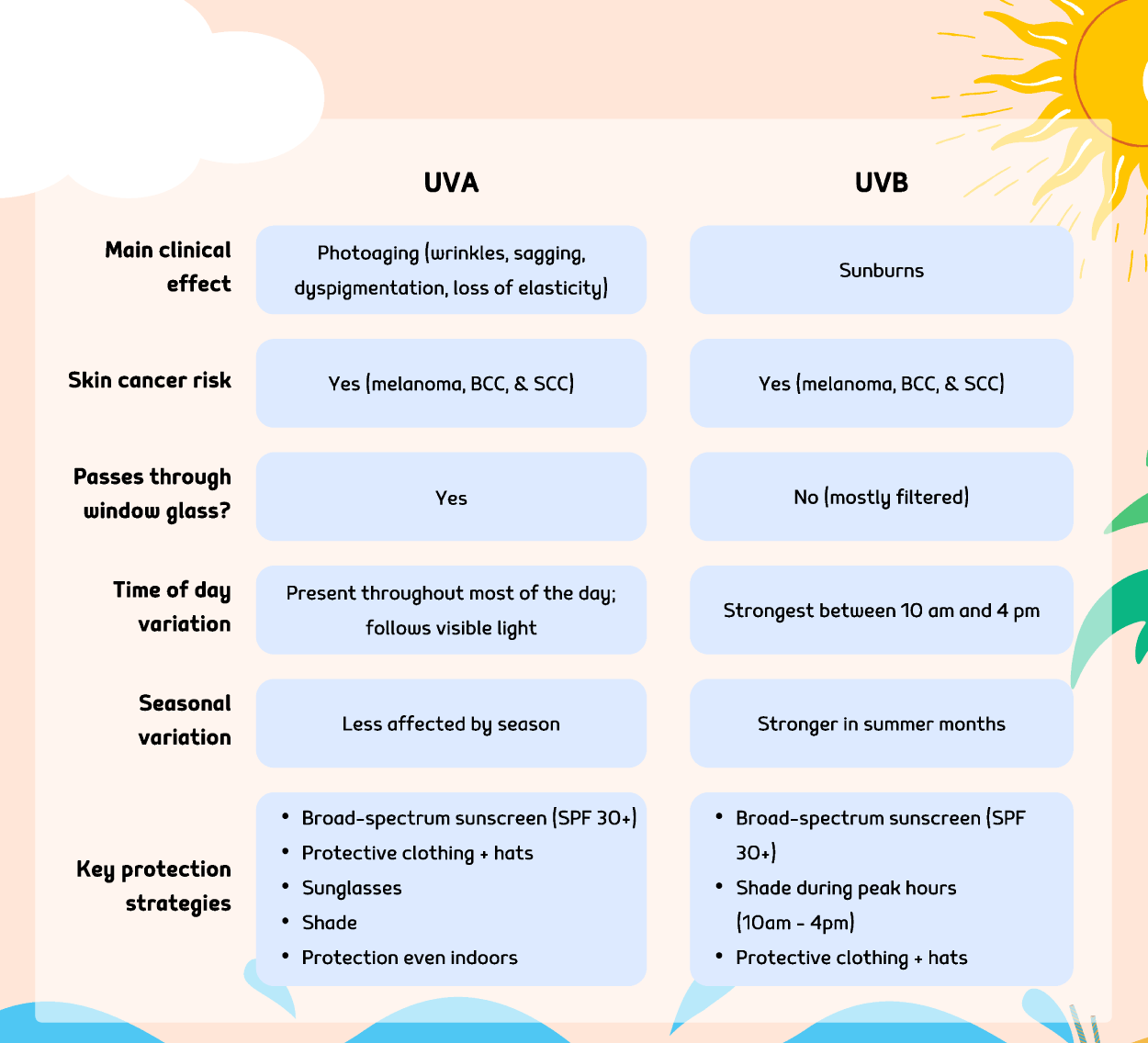
Most of the ultraviolet (UV) radiation that reaches the Earth from the sun consists of UVA rays. In fact, UVA accounts for approximately 95% of the total UV radiation.2 These rays have a longer wavelength compared to UVB, meaning they penetrate deeper into the skin.
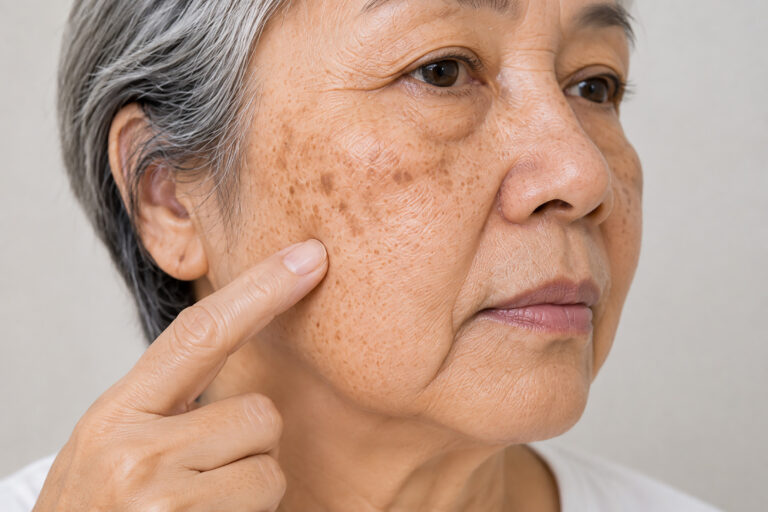
In terms of impact, UVA rays are the primary cause of premature skin aging, also known as photoaging.2 This can include, but is not limited to, wrinkles, dark spots, and sagging skin. These rays cause damage by generating harmful molecules within the skin that break down collagen and elastin, two proteins that help maintain the skin’s elasticity and youthful appearance.3
UVA rays can pass through clouds and window glass, so exposure can occur even while driving, sitting near windows, or spending time outdoors on cloudy days.4
UVB Rays: The “Burning” Rays
While UVB rays make up a minority of the UV radiation that reaches the Earth’s surface, they still carry significant risks because they contain more energy than UVA rays. These rays account for approximately 5% of total UV radiation and are primarily absorbed in the outer layers of the skin.2 UVB rays can directly damage the DNA within skin cells, and this damage can accumulate over time without proper protection. If left unrepaired, these DNA mutations can increase the risk of developing skin cancer.5 However, UVB rays also have beneficial effects, as they play an essential role in helping the body produce vitamin D. Unlike UVA rays, UVB rays do not penetrate clouds and window glass as easily.1
In terms of their impact, UVB rays are primarily responsible for sunburns.2 These rays are strongest during peak daylight hours, typically between 10 a.m. and 4 p.m., and their intensity varies significantly depending on the weather and season.6 This increased intensity is what makes UVB rays particularly effective at damaging the skin and causing sunburn.2
How to Protect Yourself
Both UVA and UVB rays have harmful impacts to our skin, meaning a sun safe routine should protect you against both. The following steps can help you protect yourself from the negative effects of UV radiation:
- Broad spectrum sunscreen with SPF 30 or higher.1 The term “broad spectrum” means that the sunscreen protects against both UVA and UVB rays. SPF stands for Sun Protection Factor, and because UVB rays are primarily responsible for sunburns, SPF reflects protection against UVB radiation. Opting for broad-spectrum coverage ensures that you are protected from UVA rays as well.
- Spend time in shaded areas.1 Particularly during peak UV hours (10 a.m. to 4 p.m.) it is essential to avoid direct sunlight by staying in shaded areas. Keep in mind that UV rays can reflect off of surfaces such as water and snow, which can increase your exposure even if you are in the shade.
- Wear protective clothing and sunglasses.1 Clothes such as long-sleeved shirts and pants can protect you from the harmful sun rays. Clothes with a UPF (Ultraviolet Protection Factor) of 30 or more are particularly beneficial for complete protection. In addition, wide-brimmed hats that cover your face and neck help protect from areas that are commonly missed such as the ears and back of the neck. Sunglasses that block UVA and UVB rays to protect your eyes and the skin around them.
References
- Ultraviolet radiation [Internet]. Centers for Disease Control and Prevention. Available from: https://www.cdc.gov/radiation-health/features/uv-radiation.html#cdc_story_challenge-types-of-uv-radiation-rays
- Health Canada. Government of Canada [Internet]. / Gouvernement du Canada; 2025. Available from: https://www.canada.ca/en/health-canada/services/health-risks-safety/radiation/types-sources/ultraviolet.html
- Brar G, Dhaliwal A, Brar AS, Sreedevi M, Ahmadi Y, Irfan M, et al. A comprehensive review of the role of UV radiation in photoaging processes between different types of skin. Cureus. 2025 Mar 24; doi:10.7759/cureus.81109
- UV window film & tint [Internet]. 2025. Available from: https://www.skincancer.org/skin-cancer-prevention/sun-protection/uv-window-film/
- Bérubé R, Drigeard Desgarnier M-C, Douki T, Lechasseur A, Rochette PJ. Persistence and tolerance of DNA damage induced by chronic UVB irradiation of the human genome. Journal of Investigative Dermatology. 2018 Feb;138(2):405–12. doi:10.1016/j.jid.2017.08.044