– Article by Katya Peri M.Sc.- McGill University
Skin cancer is the most commonly diagnosed cancer in Canada, and melanoma – its deadliest form – continues to rise at an alarming pace. Approximately 10,800 Canadians were diagnosed with melanoma in 2025, and three to four Canadians die from the disease every single day.¹ The majority of these cases could be preventable: the World Health Organization estimates that 85% of melanomas in Canadian adults are directly attributable to ultraviolet (UV) radiation exposure.² As awareness grows, so does the arsenal of tools available for protection and one of the most exciting developments is the rapid rise of SPF and UPF-rated clothing.
This article explores how UV-protective clothing works, what the science says about its effectiveness, and how it fits into a comprehensive melanoma prevention strategy for Canadians of all ages and skin types.
Understanding UPF: The SPF of Clothing
When people think of sun protection, sunscreen is typically the first line of defence that comes to mind (Learn more about to look for in sunscreen.), but clothing has always offered a degree of protection — and purpose-designed UV-protective garments are now proving to be among the most reliable forms of photoprotection available.
The measure of a fabric’s ability to block UV radiation is its Ultraviolet Protection Factor, or UPF. Just as SPF (Sun Protection Factor) quantifies how long a sunscreen can protect skin before burning, UPF quantifies how much UV radiation both UVA and UVB a fabric prevents from reaching the skin. A garment rated UPF 50 allows only 1/50th (approximately 2%) of UV rays to penetrate.⁸ Importantly, UPF measures both UVA and UVB radiation, while SPF-rated sunscreens unless explicitly labelled “broad-spectrum” only account for UVB rays, which are primarily responsible for sunburn. UVA rays, which penetrate deeper into the skin and drive premature aging and cancer, are additionally blocked by quality UPF-rated fabrics.⁸
The Skin Cancer Foundation rates fabrics as follows: UPF 15–24 (good protection), UPF 25–39 (very good protection), and UPF 40–50+ (excellent protection). A UPF of 50 is required to earn the Foundation’s Seal of Recommendation.⁸
What Factors Determine a Fabric’s UPF?
Not all clothing is created equal. A common misconception is that wearing any shirt offers meaningful UV protection. In reality, a standard white cotton T-shirt provides an average UPF of only 5; meaning 20% of UV radiation still reaches the skin.² A thin, wet, or light-coloured shirt may offer even less.⁸
Several factors affect how protective a garment truly is:
- Weave density: Tightly woven fabrics leave less space for UV rays to penetrate. A simple test: hold your garment up to the light if you can see through it, UV radiation can get through, too.
- Colour: Darker and brighter colours absorb UV rays rather than allowing them to pass through. Unbleached cotton contains natural lignins that act as UV absorbers.
- Fabric composition: Shiny polyesters and lightweight silks can be highly protective because they reflect radiation. High-tech fabrics may be treated with UV-absorbing chemical additives or dyes.
- Fit and stretch: Tight or stretched clothing can pull fibers apart, reducing the level of protection. Loose-fitting garments maintain better coverage. Similarly, wet fabric loses some of its protective ability.
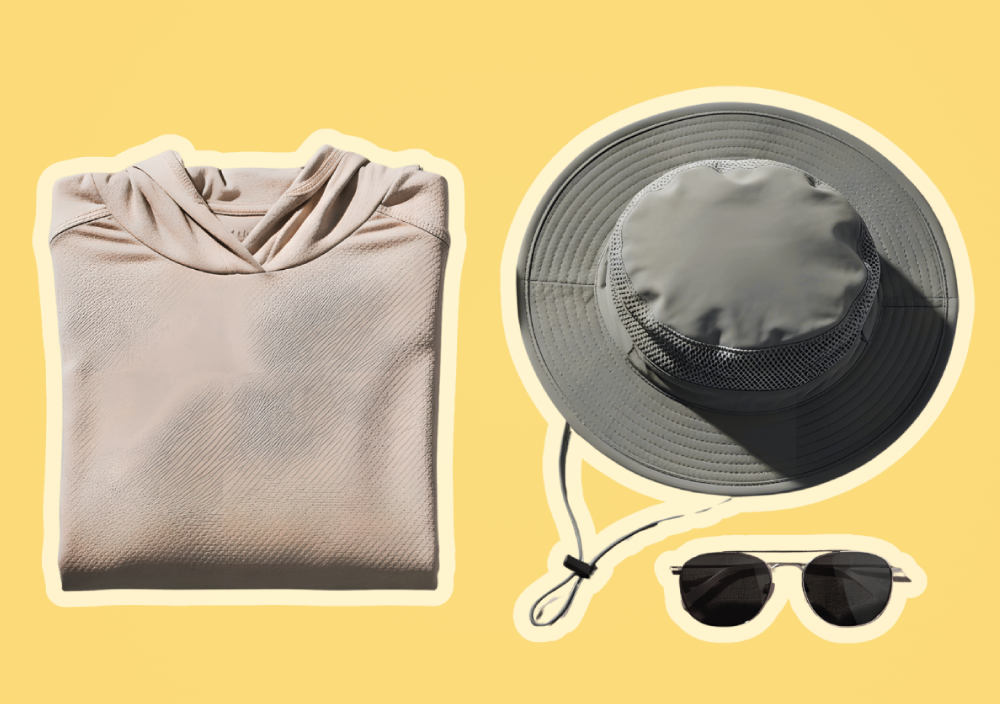
- Coverage area: The more skin a garment covers, the greater the overall protection. Long-sleeved shirts, wide-brimmed hats, and long pants significantly reduce cumulative UV exposure compared to short-sleeved or open clothing.
 A Critical Finding: UPF Clothing Prevents Moles in Children
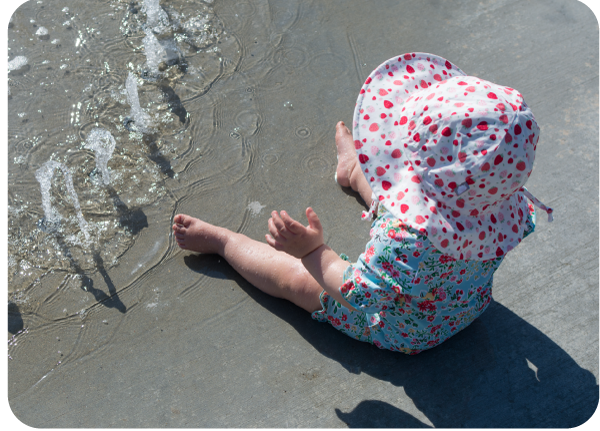
Perhaps the most compelling evidence for the clinical value of UV-protective clothing comes from a randomized controlled trial conducted across 25 childcare centres in North Queensland, Australia; a region with among the world’s highest UV exposure levels. This landmark study, published in a peer-reviewed dermatology journal, found that children who regularly wore UPF 30–50+ garments covering at least half their body surface for 3.5 years developed nearly one-quarter fewer melanocytic nevi (pigmented moles) than children in the control group.¹⁰
This finding is of profound public health significance. The number of pigmented moles is the most important individual risk factor for melanoma. Preventing mole development in early childhood a period of critical sun exposure may reduce an individual’s lifetime melanoma risk. The study authors noted the results were achieved even in a context where sun safety awareness was already high and where hats and sunscreen were widely used, making it more difficult to detect a statistically significant protective effect.¹⁰
The authors called on health care providers to stress the importance of garment coverage when advising on sun protection for children, and recommended that clothing standards include garment coverage requirements not just fabric UPF ratings on product labelling.¹⁰
UPF Clothing in a Canadian Context
Canadians often underestimate UV risk due to cooler temperatures and a cultural association of sun damage with tropical climates. However, UV radiation can penetrate clouds and reach harmful levels even on overcast summer days. Statistics Canada data confirm that melanoma risk is linked to summertime UV exposure across the country residents of Calgary, for instance, face a 38% higher melanoma risk than those in Edmonton due to differences in UV levels related to altitude and latitude.⁶ Fresh snow reflects up to 88% of UV rays, nearly doubling exposure for skiers, snowboarders, and other winter outdoor enthusiasts.¹¹
Canada’s growing outdoor culture, from hiking and cycling to gardening and water sports, creates sustained periods of UV exposure that even diligent sunscreen users may struggle to manage effectively. SPF clothing provides a passive, reliable layer of protection during these activities that is particularly valuable when reapplication is inconvenient or forgotten. Outdoor workers, who face 2.5 to 3.5 times the average lifetime UV exposure compared to indoor workers, represent a population where UPF-rated workwear could significantly reduce occupational skin cancer risk.⁹
Practical Guidance: Choosing and Using UPF Clothing
When selecting and using sun-protective clothing, keep the following evidence-based principles in mind:
- Look for the UPF label: Choose garments rated UPF 30 or higher. UPF 50+ is considered excellent protection by the Skin Cancer Foundation.⁸
- Prioritize coverage: Long sleeves, high necklines, and long pants provide more protection than cropped or open styles. The proportion of body surface area covered matters.¹⁰
- Choose broad-spectrum protection: Quality UPF fabrics protect against both UVA and UVB rays. Look for fabrics specifically engineered for this purpose rather than relying on regular clothing.⁸
- Be aware of wear and tear: Some UPF coatings may diminish over time or with repeated washing. Check labels for wash durability ratings. Some garments are rated for up to 500 washes.¹²
- Don’t forget the hat and sunscreen: UPF clothing works best as part of a layered approach. A wide-brimmed hat (brim of at least 3 inches) protects the face, scalp, neck, and ears. Apply broad-spectrum sunscreen with SPF 30 or higher to all uncovered skin and reapply every two hours.⁸
- Start early with children: The evidence from Australia suggests that consistent use of UPF clothing in early childhood may meaningfully reduce lifetime melanoma risk by preventing the accumulation of moles during critical developmental years.¹⁰
Dispelling Common Myths
“All clothing protects me from the sun.”
False. A typical cotton T-shirt offers a UPF of only 5, meaning 20% of UV radiation still reaches the skin. Thin, light-coloured, wet, or stretched garments offer even less protection.²
“UPF clothing is only for fair-skinned people.”
False. While fair skin carries a higher baseline melanoma risk, UV radiation causes DNA damage in people of all skin tones. Melanin in darker skin provides the equivalent of approximately SPF 4–6, far below the recommended level for prolonged outdoor exposure. People of all backgrounds benefit from UV-protective clothing.⁵
“I only need UV protection in the summer.”
False. UV radiation is present year-round. Fresh snow reflects nearly 88% of UV rays, significantly increasing exposure during winter outdoor activities. The cumulative burden of UV exposure across all seasons contributes to melanoma risk.¹¹
 A Wearable Solution to a Growing Crisis
The rise of SPF and UPF clothing represents a meaningful and evidence-backed step forward in melanoma prevention. For Canadians navigating a climate that includes intense summer sun, reflective snow, and a love of outdoor activity, protective clothing offers reliable, passive, and consistent protection that complements and, in some respects, surpasses what sunscreen alone can provide.
The science is clear: UPF-rated fabrics block more UV radiation than sunscreen at recommended doses, require no reapplication, and when introduced during early childhood may meaningfully prevent the development of melanocytic nevi and the lifetime risk of melanoma that comes with them. As the UPF clothing market grows and becomes more accessible, Canadians have a powerful new tool in the fight against one of the country’s fastest-rising and most preventable cancers.
Melanoma Canada encourages all Canadians to make UPF-rated clothing a regular part of their sun safety routine alongside broad-spectrum sunscreen, shade-seeking, and regular skin checks with a qualified dermatologist.
References
- Skinhealthhubs.com. (2026, March). Canada warns of rising skin cancer risk as experts urge sunscreen use. Retrieved from https://www.skinhealthhubs.com/archives/23135
- Melanoma Research Alliance. (n.d.). Sun protective UPF clothing. Retrieved from https://www.curemelanoma.org/about-melanoma/prevention/covering-up-with-clothing
- Richer, V., et al. (2022). Population-based study detailing cutaneous melanoma incidence and mortality trends in Canada. Frontiers in Medicine. PMC8927870.
- Health Canada. (n.d.). Skin cancer. Retrieved from https://www.canada.ca/en/public-health/services/sun-safety/skin-cancer.html
- Canadian Skin Cancer Foundation. (n.d.). Skin cancer facts and statistics. Retrieved from https://www.canadianskincancerfoundation.com/skin-cancer/
- Statistics Canada. (2017, May 17). Health Reports: Sun exposure and melanoma skin cancer. The Daily. Catalogue No. 82-003-X.
- Richer, V., et al. (2022). Population-based study detailing cutaneous melanoma incidence and mortality trends in Canada. PMC8927870.
- Skin Cancer Foundation. (n.d.). Sun protective clothing. Retrieved from https://www.skincancer.org/skin-cancer-prevention/sun-protection/sun-protective-clothing/
- Ou-Yang, H., et al.(2022). Slip versus slop: A head-to-head comparison of UV-protective clothing to sunscreen. Photodermatology, Photoimmunology & Photomedicine. PMC8833350.
- Olsen, C.M., et al. (2023). Sun-protective clothing worn regularly during early childhood reduces the number of new melanocytic nevi: The North Queensland Sun-Safe Clothing Cluster Randomized Controlled Trial. PMC10046807.
- Melanoma Canada. (n.d.). Sun safety. Retrieved from https://melanomacanada.ca/sun-safety/
- MD Anderson Cancer Center. (n.d.). 7 things to know about UPF, sun protection and clothing. Retrieved from https://www.mdanderson.org