Gel manicures are a fixture of modern beauty culture, admired for their glossy durability and chip-resistant finish, but as their popularity has grown, so has the medical literature examining their risks. Dermatologists are seeing rising rates of nail damage, allergic reactions, and UV-related concerns tied to gel systems, particularly with DIY use and improper technique.
Here is what peer-reviewed research actually shows:
How Gel Polish Works and Why It Differs from Regular Polish
Unlike regular nail polish, which dries when exposed to air, gel polish contains special chemicals called (meth)acrylates that harden when exposed to UV or LED light. This process, called photopolymerization, creates the strong, long-lasting coating that makes gel manicures so durable.
To help the gel stick to the nail, the application process often involves buffing the nail surface, removing natural oils and moisture with solvents, and applying products called primers. While these steps help the manicure last longer, repeated use can put stress on the nail and surrounding skin over time.
Can Gel Manicures Weaken Nails?
Short answer: Yes, they can. Gel manicures don’t always damage nails, but repeated treatments or improper application and removal can weaken the nail over time.
Your nails are made of keratin — the same strong protein found in your hair and the outer layer of your skin. Keratin forms the tough, protective structure of your nails, but it can still become damaged.
- Mechanical abrasion from repeated buffing, which thins the nail plate
- Acetone-based soaking during removal, which dehydrates the nail
- Aggressive or improper removal, increasing risk of onycholysis (nail separation from nail bed)
A self-questionnaire study of 2,118 gel nail users found that over 75% reported adverse nail plate changes after removal, a rate significantly higher than those observed during application or wear [1]. The good news: multiple reviews confirm these changes are usually reversible if gel use is paused [2].
Allergic Contact Dermatitis: A Growing Epidemic
One of the more important risks associated with gel manicures is an allergic skin reaction called allergic contact dermatitis (ACD). This reaction can happen when the immune system becomes sensitive to (meth)acrylates, the chemicals used in many gel nail products to help them harden and stay durable.
The primary culprit is 2-hydroxyethyl methacrylate (HEMA), which was formally added to the European baseline patch test series in 2019 given its rising clinical relevance. In a retrospective 8.5-year study at the Amsterdam University Medical Centers, 97% of patients diagnosed with nail-cosmetic ACD tested positive specifically to HEMA [3]. A separate Israeli cohort study found an 8.1% HEMA sensitivity rate among patients patch tested, the highest frequency reported to date, driven predominantly by nail cosmetic exposure in young women [4].
The growing popularity of at-home gel kits has also led to increased awareness of gel nail allergies. Online discussions, including the #gelallergy trend on TikTok, have highlighted many people sharing their experiences with reactions linked to gel products.
Once someone develops an allergy to (meth)acrylates, they may also react to these chemicals in other products, including some dental and medical materials such as adhesives, implants, and devices. This means that an allergy caused by gel nail products can have long-term implications beyond nail care.
Recognizing ACD from Gel Polish
- Periungual (around-nail) redness, swelling, or itching
- Blistering of the fingertips or hands
- Nail plate dystrophy or onycholysis
- Eczema on the face, neck, or eyelids (from nail-to-skin contact)
- Symptoms may also appear away from the hands if uncured gel product is accidentally transferred to other areas, such as the face or eyes, through touch.
Nail Lifting and Infection Risk
Onycholysis, the separation of the nail plate from the nail bed, creates a warm, moist environment where bacteria and fungi can colonize. Secondary infections are not directly caused by gel polish, but barrier disruption from repeated trauma or chemical exposure increases susceptibility. A review of reported nail cosmetic side effects found that common complications included allergic contact dermatitis (skin allergy), onycholysis (when the nail separates from the nail bed), and onychomycosis (a fungal nail infection). [6].
What About UV Curing Lamps?
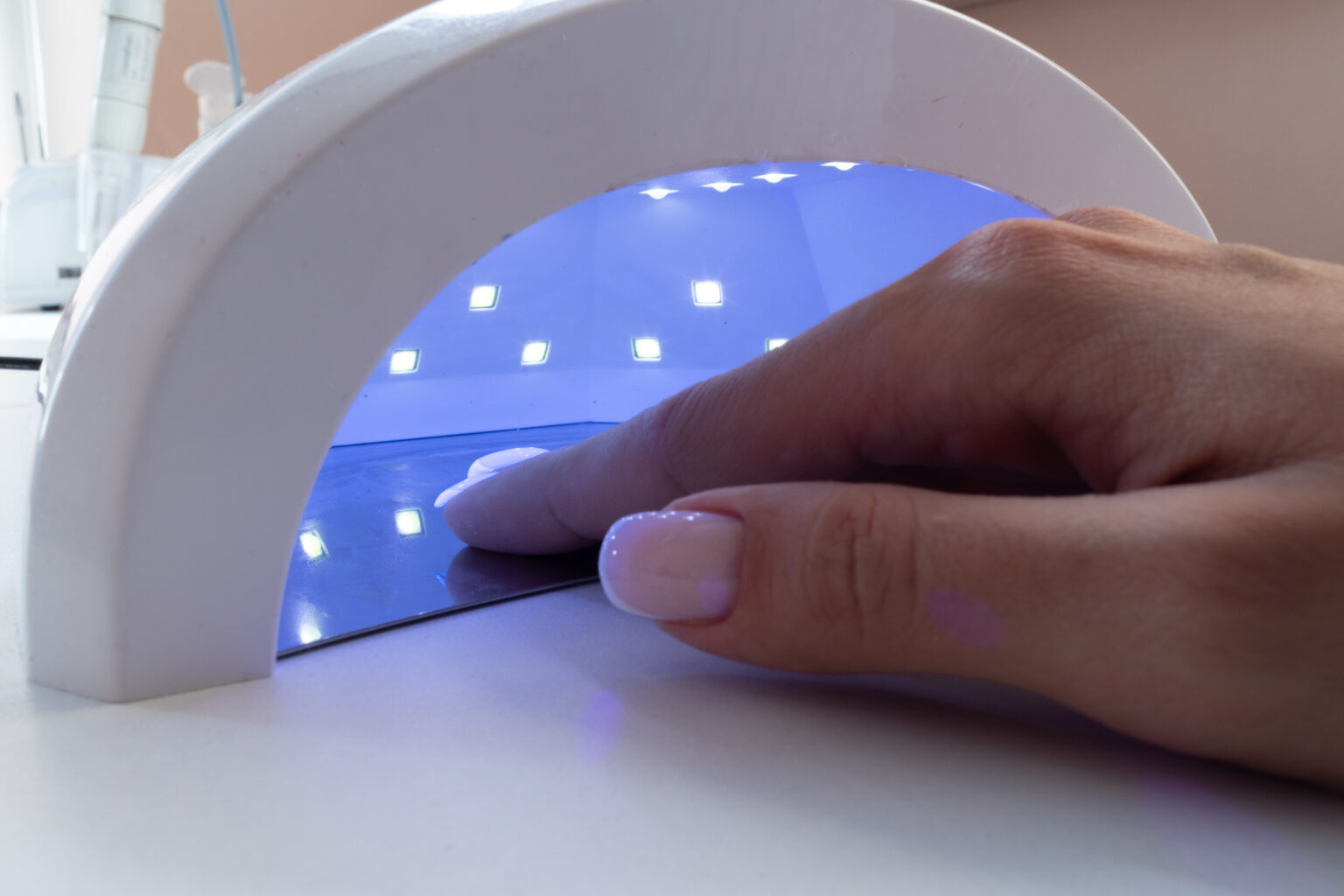
One common question about gel manicures is whether the lamps used to cure (harden) the polish expose skin to UV light. Gel lamps mainly emit UVA rays, a type of ultraviolet light that can reach deeper layers of the skin. Repeated UVA exposure is linked to premature skin aging and long-term changes to skin cells.
For most people, the risk from UV exposure during a gel manicure session appears to be low, especially with occasional use. However, one reported case involved a 45-year-old patient with a weakened immune system who developed squamous cell carcinomas (a type of skin cancer) on the backs of her hands after having monthly gel manicures for 20 years. A direct link to the gel lamps was not confirmed, but the case highlights the importance of sun protection, especially for people who are immunocompromised or who regularly use gel nail lamps.
Steps to Reduce Lamp Exposure
- Apply broad-spectrum SPF 30+ to the backs of the hands 20 minutes before curing
- Wear UV-protective fingerless gloves during the curing step
- Limit frequency of gel treatments and take regular breaks
The DIY Problem
At-home gel nail kits have dramatically expanded the risk landscape. Professional nail technicians are trained to avoid skin contact with uncured gel and to ensure thorough curing. Self-application carries a higher risk of under-curing (leaving reactive monomers on skin) and gel overflow onto the periungual skin — both of which increase sensitization risk [6].
The Bottom Line?
Gel nails are not inherently harmful, but there are some risks to be aware of, especially with frequent use, improper application, or at-home use. The biggest concern is developing an allergy to (meth)acrylates, the chemicals that help gel products harden. This can cause allergic contact dermatitis (an itchy skin reaction) and may lead to reactions to these chemicals in other products, including some medical and dental materials. UV exposure from gel curing lamps is low during each use, but repeated exposure can add up over time.
If you notice persistent nail changes, skin redness, or new lesions on the hands, consult a dermatologist. Early assessment can prevent long-term complications.

About the Author: Katya is a fourth-year medical student in McGill University’s MDCM program, pursuing dermatology through CaRMS. Her research focuses on dermatology, skin cancer, health economics, and bioethics, and she has authored more than 50 peer-reviewed publications. She collaborates with dermatologists and patient organizations across Canada and mentors medical students interested in research. Outside of medicine, she enjoys film photography, graphic design, and pastel drawing.
References
[1] Putek J, et al. Side-effects associated with gel nail polish: A self-questionnaire study of 2,118 respondents. Acta Derm Venereol. 2020;100(18):adv00325.
[2] Litaiem N, Baklouti M, Zeglaoui F. Side effects of gel nail polish: A systematic review. Clin Dermatol. 2022;40(6):706–713.
[3] Steunebrink IM, de Groot A, Rustemeyer T. Contact allergy to acrylate-containing nail cosmetics: A retrospective 8-year study. Contact Dermatitis. 2024;90(3):262–265.
[4] Hilewitz D, et al. Pandemic of sensitivity to acrylate containing nail cosmetic among young Israeli women? Contact Dermatitis. 2024;91(6):485–490.
[5] Axler EN, Lipner SR. Unveiling an acrylate allergy epidemic: Analysis of dermatologic findings associated with at-home gel nails on TikTok. J Cutan Med Surg. 2024.
[6] Javaid K, et al. Dermatologic conditions associated with popular nail cosmetics: A systematic review. J Cosmet Dermatol. 2025;24(10):e70519.
[7] Rieder EA, Tosti A. Cosmetically induced disorders of the nail with update on contemporary nail manicures. J Clin Aesthet Dermatol. 2016;9(4):39–44.
[8] Gatica-Ortega ME, Pastor-Nieto MA, et al. Non-occupational ACD caused by long-lasting nail polish kits for home use. Contact Dermatitis. 2018;78(4):261–265.