Breaking down the “why” behind the different types of melanoma.
Not So Simple
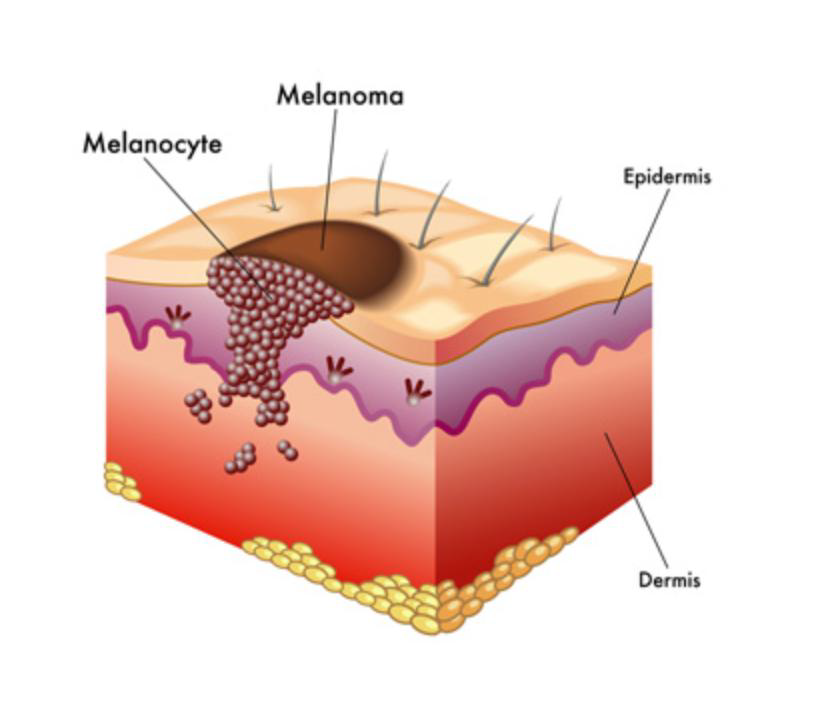
When we think of cancer, it’s usually just one type of cancer. It’s lung cancer, or it’s bladder cancer, or it’s blood cancer, but it’s rarely that easy. A lot of the time, for the sake of simplicity, we lump kinds of diseases together and put them under the umbrella of their common organ. That makes things simple, but sometimes it oversimplifies a complex topic. Let’s take a look at melanoma, for example. Melanoma is a type of skin cancer derived from a specific type of cell, melanocytes. Melanocytes are the cells responsible for producing melanin, the pigment that gives skin its colour. Interestingly, melanoma is one of the few cancers that continues to become more common. Each year, some cancers are beginning to trend downwards, becoming less common, but melanoma continues to rise. So, for such a common cancer, often referred to as just “melanoma”, a cancer of just one cell type, that means that there should only be one melanoma, right? Unfortunately, it’s not so simple…
Many Melanomas
Despite all melanomas coming from a single cell type, there happen to be many different kinds. There are four common types, from most to least common: superficial spreading, nodular, lentigo maligna, and acral lentiginous. Now, that’s a lot of big words and confusing names, so what’s the actual difference? The key factors that differentiate melanomas are their primary risk factors, their behaviour, and location.
The risk factor is the easiest.
For three out of the four common types of melanoma, the primary risk factor is exposure to ultraviolet light, all except for acral lentiginous melanoma.
he primary risk factors for acral lentiginous melanoma are genetic factors and physical stress to tissues. That’s why these cancers are usually found on the hands and feet, places that are constantly exposed to labour and stress, the weight of standing and grabbing all the time. To differentiate the others, the most obvious factor is how they behave, much of which can be found in their names. Superficial spreading mostly grows outwards across the skin, expanding its surface area. Nodular melanoma is typically the fastest-growing and tends to grow upward, making a raised bump. That gives it that “nodule” shape that the name implies. Lentigo maligna melanoma is slower, often found in sun-damaged spots, and grows outwards first before it grows down, deeper into the skin.
But Why?
This is where it gets a bit more complex. We have several different types of cancer that come from the same cell, many of which even have the same primary risk factor. But, despite that, they appear different, behave differently, and have varying levels of aggression. How is that possible? It likely has to do with their specific mutations and how many they have. See, ultraviolet radiation increases our risk of cancer by damaging our DNA. If our DNA is damaged in critical genes, genes that help regulate our cells and keep them healthy, cells can quickly get out of control. This leads to uncontrolled cell division, survival of unhealthy cells, and other characteristics that make cancer cancer. But not all genes are made equal. Many different genes regulate different aspects of the cell. As a result, damage to different genes, or having more damage, can dramatically alter a cell’s behaviour.
If we look specifically at superficial spreading and nodular melanoma, which account for 90% of melanoma cases, the difference becomes clearer. It turns out that many of the same genes are mutated in both types.
But when you look a bit closer, you find that nodular cancer, on average, has more mutations overall.
That means more genes that have lost their function, causing a cell to have less and less control. This accumulation of mutations in essential genes is likely why nodular melanoma is faster-growing and grows in a different direction.
I think of it a lot like a rule book. A collection of important guidelines that keep the cell safe and functioning properly. Without it, the cell spirals out of control. In melanoma, both superficial spreading and nodular have some of the same pages ripped out, but nodular melanoma has another chapter ripped out on top of that, leading to even further loss of control and sporadic behaviour.
There is, of course, more nuance than this, including specifically which genes are damaged and the order in which genes are mutated. However, this is a driving force that leads to the difference in each type of melanoma, even though each of these cancers comes from the exact same cell type, with the same primary risk factor.
Cancer is complicated. It’s often so complex that even when we refer to a single cancer, we’re often generalizing several types with a single term. Take melanoma, for example. When I used to think about skin cancer, I didn’t consider that there are different types of skin cancer, with different cells of origin. Even cancers from the same cell of origin can have different behaviour, appearance, and aggression. Melanoma, which is becoming increasingly common, is a prime example of this complexity.
Despite several types all coming from melanocytes and common primary risk factors, each type is unique. Some grow faster, some grow sideways instead of up or down, some are darker, and some only grow in certain spots. To understand why cells with such similar origins differ so dramatically, you have to look at their genetics to see what drives their differences. Different sources of DNA damage, including UV rays and inherited mutations, can cause the loss of essential regulatory genes.
Finding Support
A melanoma diagnosis can bring many questions and emotions, not only for patients, but also for their families and caregivers. You don’t have to navigate the journey alone.
Melanoma Canada offers a wide range of free support services and educational resources to help you at every stage of your journey. Whether you’re newly diagnosed, undergoing treatment, living with advanced melanoma, or supporting a loved one, our team is here to provide trusted information, compassionate support, and connections with others who understand.
Our free services include patient and caregiver support groups, one-on-one cancer coaching and support, educational webinars and videos, peer-to-peer support, and access to trusted resources.
If you or someone you care about is looking for support, we’re here to help. Contact us at 1-877-560-8035, email support@melanomacanada.ca, or learn more about our support services at melanomacanada.ca/support.
 About the Author:
Noah is an oncology researcher and graduate student at the University of Alberta, studying cancer science. Years of frustration trying to understand the disease led him to create ONCO-logical, a newsletter that breaks down complex cancer biology into simple explanations. Noah is passionate about making learning about cancer as easy as possible, because it’s already hard enough. Visit ONCO-logical
References
1. Wang, M., Gao, X., & Zhang, L. (2024). Recent global patterns in skin cancer incidence, mortality, and prevalence. Chinese Medical Journal, 138(2), 185.
https://doi.org/10.1097/CM9.0000000000003416
2. Types of melanoma skin cancer | Canadian Cancer Society. (n.d.). Retrieved July 14, 2026, from
https://cancer.ca/en/cancer-information/cancer-types/melanoma-skin/what-is-melanoma/t ypes-of-melanoma
3. Kelly Hall, A. H., & Rapini Affiliations, R. P. (2023). Acral Lentiginous Melanoma. StatPearls [Internet]. Treasure Island (FL): StatPearls.
https://www.ncbi.nlm.nih.gov/books/NBK559113/
4. Sini, M. C., Polesel, J., Simi, S., Manca, A., Cossu, A., Maestrale, G. B., Massi, D., Palmieri, G., Pizzichetta, M. A., Falduto, M., Moretti, G., Cerati, M. P., Lombardo, M., Sulfaro, S., Corradin, M. T., Pasquini, P., Astorino, S., Canzonieri, V., & Pinzani, C.
(2026). Mutation rates in main tumour driver genes predict prognosis in patients with superficial spreading or nodular primary melanoma: results from the CARAMEL study by the Italian Melanoma Intergroup (IMI). Experimental Hematology & Oncology, 15(1), 17. https://doi.org/10.1186/S40164-026-00750-Y